Brian (0s):
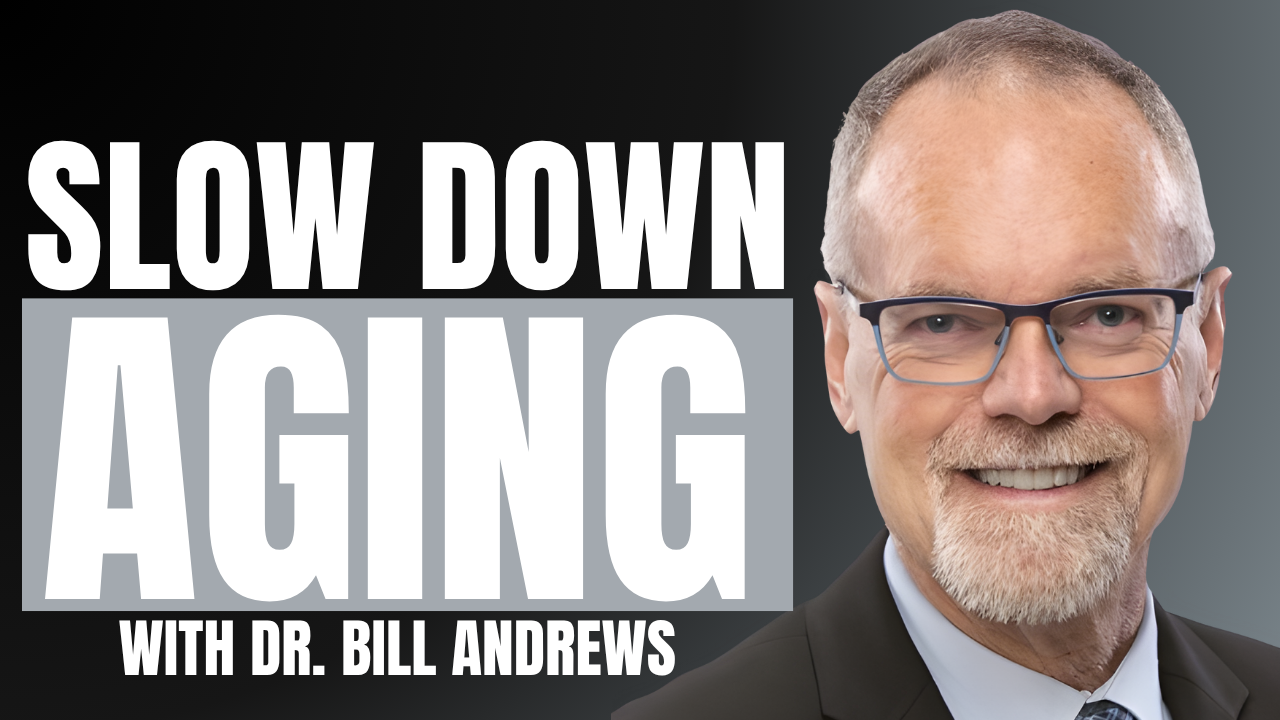
This week I interviewed Dr. Bill Andrews. He holds a PhD in Molecular and Population. Gen X has over 50 patents in anti-aging and genetic innovations. And his leadership led to the discovery of human telomerase, the enzyme connected to cellular aging. We discussed lifestyle factors to help slow down aging, along with his research around telomeres, his favorite nutraceuticals to help lengthen telomeres exercises to live longer. And his one tip to get your body back to what it once was. Really enjoyed my interview with Dr. Andrew. I know you will too. Thanks so much for listening and enjoy the show. All right. Welcome to the Get Leany Clean podcast. My name is Brian Gr. And I'm Dr. Bill Andrews on Welcome to the show.
Bill (42s):
Ah, thank you for having me on the show.
Brian (46s):
No problem. Glad to have you on Leading expert on longevity research. You also have a podcast scientist, anti-aging researcher. What sort of prompted you to get into this, this type of research?
Bill (1m 1s):
Well, I think living's the greatest thing that ever happened to any of us. And I just hate the thought that living can be shortened for any of us just because of this, what I consider dumb thing called aging. So, but I, I've spent my whole life just trying to study what aging is and why we age and how we age and how not to age. And I am just more and more convinced that it's something we don't need to do. And, but I can describe more details after I hear what other questions you have for me.
Brian (1m 35s):
Yeah. Well, it's interesting. I mean, researching aging, what's probably, what's like the biggest thing that maybe surprised you or that you've learned through the process of, you know, all the many years that you've been researching
Bill (1m 51s):
That aging is completely unnecessary, I guess is the biggest, is actually that wasn't a surprise, that was a slow buildup. Like I would say the biggest surprise is that almost everybody in the anti-aging field has it all wrong. And probably intentionally, or not intentionally, maybe, but it's more because the whole field is filled with people just trying to make a buck, trying to sell a product to make people younger. But I'm, I've been just very interested in trying to cure my own aging. You know, I wanna make everybody younger and I'm not in it for the money.
Bill (2m 31s):
I, so I've, I've made, I mean, since I've been 10 years old, I've been interested in this. 'cause my father was very interested in it and he got, he put the seed in my head and he and I teamed up together on this until he passed away. And about 10 years ago. But we, we teamed up on trying to work together on doing whatever we could, but I, I just surprised that all the theories on aging, I learned them all. None of 'em made sense to me because all the twos and twos didn't add up. I started my own anti-aging clubs in high school and college and graduate school and just trying to piece it all together.
Bill (3m 13s):
Some of the people that were in my clubs, especially in college, ended up getting Nobel Prizes later. So I, I, I mean, I was with a pretty elite group of people having these discussions, but, but it's like trying to figure out what really is going on in the background of all this stuff that doesn't make sense, but it sure makes a lot of people a lot of money and it, and that that's been going on since before Cleopatra, Cleopatra had people telling her all the time that Here's a cure for aging and drink this, and you'll be younger. Of course, she never got old to begin with, but, but you know, it goes lot way back to, God, I can't remember, there's a, 2000 years ago somebody wrote about a cure for aging.
Bill (4m 0s):
I'm going blank on his name right now.
Brian (4m 4s):
You know, when, when, when I think about aging, I haven't, I haven't obviously researched as much as you have, but, but I think of like, you sort of have, you have like anabolism and catabolism, you know, you have growth and then you have like, the opposite of growth would just be like sort of cutting back or, you know, I think of like growth would be like eating and, and protein and like trying to build muscle. And then you have catabolism, which maybe would be like, you know, maybe prolonged fasting and things like that. And I always thought like, it, it's, it's important to sort of balance those two.
Brian (4m 45s):
And sometimes you hear, I don't know what your thoughts are on this, but like, your people come into the anti-aging realm and, you know, it's all about just like restriction. But what, what are your thoughts around aging and like what are some maybe lifestyle changings that people can do to help age gracefully, I guess?
Bill (5m 4s):
Well, there, there's a lot of things that people can do to slow down aging, but it's really not aging that they're slowing down. It's just some of the aspects of aging. Okay. So, so diet is extremely important, but it's, it's not gonna allow anybody to live longer than like 125 years. That, that's something that we learned all in all of our studies and stuff like that. All my life, and even especially in my research here at Sierra Sciences, our lifespans and health spans are limited by a clock that practically has nothing to do with diet and stuff like that.
Bill (5m 46s):
Diet poor diets can accelerate that clock. And that's why none of us can live to be 125 years. So there's, so you can slow down accelerated aging. Okay? So there's things you can do to accelerate your aging and you can slow down that, but you cannot slow down the basal level rate of aging, which limits our lifespan. And it's a hard, fast clock, limits our lifespan to 125 years, and nobody can live longer than that without figuring out a way to solve that clock. And that's, that's what I've done slightly so far. I'm not complete, the research isn't complete yet, but I've figured out ways to slowing down that clock, which is called the telomere clock.
Bill (6m 29s):
It's the tips of our chromosomes. And they get shorter as we age. I, the analogy I often use is they're like ride tickets at an amusement park. Every time a cell divides, it loses a ticket, cell divides again, it loses a ticket just like you're on rides at an amusement park. And when you, when you run out of tickets, your cells cannot divide any longer and you die old age now by poor lifestyle, smoking, obesity, the, I'm trying to think of like
Brian (7m 3s):
Environmental, environmental factors.
Bill (7m 6s):
Oh, environmental factors too, but trying to think of diet at the moment. Sure. There's so many different things that do accelerate similar shortening. Then there's things that will actually slow down that thing like Omega-3 fatty acids and vitamin D, those things have been well published to slow down the rate of accelerated telomere shortening. But, but you still have telomere tel shortening and lengthening is like a tug of war. You've got shortening and lengthening. So even though you might be doing some things like Omega-3 fatty acids of vitamin D to lengthen antioxidants too, anti-inflammatories also, you, you, you're doing things to lengthen your tels, but you still have the shortening going on because your lifestyle isn't perfect yet or you have bad genetics.
Bill (7m 51s):
So, so it's still like a tug of war. And so trying to get rid of the shorteners on this side and add lengthener to this side is really what you wanna do. And the only way to add lengthener on this side is produce an enzyme called telomerase inside your cells. And that's, that's an enzyme that I discovered back in the early 1990s, my me and my team at Geron Corporation. And we are trying to, and it's, it's in our reproductive cells, it keeps our telomeres from shortening during the production of our sperm and our eggs so that our children are born with long telomere as long as we had when we were first born.
Bill (8m 34s):
So it's just shut off in all the other cells of our body for in evolutionary reasons, which I can explain. And I'm just trying to figure out a way to turn that gene back on. And so I've been testing for nutraceuticals and other things that can actually get inside of our cells and turn the gene back on by binding to a repressor protein that shuts it off. It turns the gene deck on to start lengthening T limits. Now we have found things that do turn that gene on now, but not enough to win the tug of war or tie the tug of war as occurs in our reproductive cells.
Brian (9m 16s):
Interesting. Yeah, and I was just, God, I had a train of thought, just lost it. But, you know, you've heard things like resveratrol that was a, that was sort of in the news for a while. There're sort of the 'cause of the red wine from the French, but is that something that sort of had some steam and maybe lost it? Or is there some e efficacy behind that?
Bill (9m 41s):
I, I take resveratrol every day. Okay. I, I believe it's one of the things that can slow down the rate of accelerated Tel short, but I, I also take like NAD nicotine my riboside mostly and uly and a to help my mitochondria. So I'm doing everything and I can, and I think a lot of these things are under the control of telomere length. And when we figure out a way to lengthen our telomeres to win that tug of war, I think those things will be unnecessary because we have studies showing now that they are all under control of the length of your telomere. So it's, it's, you know, whatever.
Brian (10m 21s):
And I was just gonna ask, like we talk about lifestyle changes as well, like obviously supplementation could be one aspect to help lengthen the telomeres. What about like things like quality sleep and reducing stress and things like that?
Bill (10m 35s):
All of them have been shown to be connected to accelerated Tel or shortened sleep is a big one. Yeah. It's important to get a good night's sleep. Stress, oxidative stress and psychological stress have been shown to be connected to the length of TERs. I've, I've spoken, I've been the keynote speaker at yoga and meditation conferences and I've shown data that people that practice yoga or meditation regularly actually have longer tels than their friends that don't practice yoga meditation. So, so almost everything your mother ever told you when you were growing up about being healthy turns out to be true because it's all been connected to Oh, affecting the length of your tel notes
Brian (11m 22s):
And what's the genetic component? Because you'll see people who have like horrible lifestyles and they'll live till like, you know, 9,800 years old. And how, how, what percentage of genetics plays a role in it?
Bill (11m 37s):
In the case of telomerase, very little. Okay. There are people that are born with accelerated aging diseases like Hutchinson Guilford Disease, also called Progeria. But it's not because of their genetics, it was because of their parents' genetics. So one of their parents had a defect to, or had dysfunctional telomerase in their reproductive cells. And so when the child was born, they were born, the child was born with shorter tels. And so the person will actually have accelerated aging and die of aging and every other aging related disease by the time they're 20.
Bill (12m 18s):
There's other similar diseases that allow people to live longer, but the most notable one is the Hutchinson Guilford's Disease. If there are other diseases, people really haven't studied to find out what those are yet. But in all cases they would be related to the parents having the, the defective gene, not, not the child.
Brian (12m 43s):
Got it. Okay. And then, yeah, I've heard you talk about keeping exercise fun. WI, you know, I I totally agree. I think that if you're doing something you enjoy, you're gonna do it more, right? Not to say that you have to actually exercise every day, but like, you know, there's some people who just hate to go to the gym and they want to, and I always say, well, find something that you really enjoy that you know you're gonna be consistent over a long period of time. Is that pretty much what you mean by that
Bill (13m 10s):
Kind of, it, it's more, it's more not making it stressful, not making exercise stressful. I, I've done like blood work during, before, during, and after ultra marathons from myself and other people, other runners. And it is typical, the, the really, the runners that are really pushing hard to finish and having a pr and place in their age group are generating a lot more inflammation and a lot more oxidative stress, both of which accelerate aging then runners that just go out and keep it fun. And so it's like, it's not, so running a hundred miles does not accelerate your agent.
Bill (13m 55s):
Okay. But pushing it, making it hard does, I mean, I always say e even like I used to hold the world record for the most a hundred mile races run in a year. Oh, wow. Okay. But I, I didn't finish every race I started. Okay. Because if the race quit being fun, I quit because not only at the time was I trying to think and I don't accelerate my aging, which really wasn't weighing heavily at my time. At the time. I was thinking, I wanna still be good for the next race. I wanna save it for the next race. And so it was like, so I would, I would quit if I thought, you know, I'm, it's too much of a struggle. There's too much of a chance that I'm not gonna make it anyway.
Bill (14m 38s):
Why destroy the next race? So I would slow down and then I would find out that I would never have like, so much inflammation that I was stiff as a board the next day. I would, you know, my, my inflammation markers like CRP and things like that would not be high as, as long as I took that attitude. So I always say, if it quits being fun, quit save it for another day. But yeah, what you were saying is true too. If, if it's fun, you do it more often. I, I would say I, it's not just running. You can kayak, you can bicycle, you can do a whole bunch of different endurance exercise running is just the easiest one to study in my opinion.
Bill (15m 23s):
But it's, it's like you can, you can actually, it's surprising how your endurance can improve if you just never actually push it hard. Just make it easy, make it fun.
Brian (15m 36s):
Yeah, that makes sense. I mean, I think that if you're living on the extremes when it comes to working out, that's when maybe it can do more harm than good. You know, it's like, you know, you do a really hard workout and you're cashed for like two days. You probably set yourself back a little bit more than he actually helped your body. Right? Like, especially as you get older, I mean, maybe when you're 25 you can probably push, you know, push those extremes more as opposed to if you're 45. 'cause recovery, I, from, for what I think is, is, you know, a big key to just making sure that you, you know, prevent injury and also, you know, just help build muscle or, or, or endurance or whatever you're looking to do.
Bill (16m 17s):
I run every single day. My 2000th consecutive day is coming up in 13 days. Wow. And
Brian (16m 25s):
No, no days off,
Bill (16m 27s):
No days off all outside rain or snow or whatever, and two miles minimum. And I, I always wear two GPSs on my wrist to, to get it all documented because there's a, there's a website where keep people, keep track of all this kind of stuff. But I never ever feel like I just ran even 10 minutes after I finished running, five minutes after I finished running. I just feel like some, sometimes I wonder, Hey, did I run today? You know, 'cause I don't wanna actually miss a day after doing so many consecutive days. That's 2000 is over, it's almost five and a half years of not missing a single day. And it would be longer if I didn't accidentally miss April 9th, 2020.
Bill (17m 11s):
Just all of a sudden woke up after midnight realizing, oh, I forgot to run.
Brian (17m 16s):
Hey everyone, quick interruption here. If you are looking to gain energy, lose inches around your waist and build strength, well look no further than my book. The Step Ladder System, six Steps to Lifelong Health and Vitality. What you get with the book is my full step-by-step plan and blueprint that I've worked with all my clients with packed in two one book with part one, you're gonna lay the foundation, tackle any common challenges that might come in your way. Part two is my six pillar blueprint, how to set you yourself up with a solid plan and know exactly what to do, do when life throws any curve balls. And lastly, step three are learning to implementation a plan for getting results over the next weeks and beyond.
Brian (17m 59s):
So there you have it. I'll leave a link in the show notes for my step letter system book now back to the podcast. Well, that's impressive. Do, do your joints have your joints held up fine knees?
Bill (18m 12s):
Yeah. My, I I don't have any problems with joints at all. And that's, that's, that's something I've studied a lot too, like consistent exercise. So being consistent helps your joints stay lubricated. Hmm. And so you don't get the wear and tear. It's the occasional runner that goes out, runs every two weeks and runs hard. They're the ones that are gonna get a lot of damage because they're gonna induce a lot of infl inflammatory cells to migrate to the joints and cause swelling. And then actually it's the inflammation that causes the injuries, the joints, because of all that pressure being built up in your joints. But you, but if you run every day, your body doesn't get the signal, Hey, something's wrong.
Bill (18m 56s):
Okay, sure. Just ignore it. But yeah, IIII, I've been, I some people say, well that's because you started running when you were old. Okay, well that's a lot of ru a lot of older runners. And I, I don't like the word old. I, I like for, for longer lived. So a lot of the longer lived runners actually didn't start running until they were longer lived. I, I've been running competing since before I was 10 years old. In fact, I I, my father entered me into my very first one mile race when I was 10 years old. And I lapped second place twice. So it was like, I was just good at runner and I wasn't, I didn't have the kind of parents that told me that quit running around the pool.
Bill (19m 42s):
My parents just encouraged me to run everywhere. So I I I've been running my entire life competing in high, high school track and cross country college, high school track and cross country. And I, I don't have any joint pain, joint injuries whatsoever. Or pain.
Brian (19m 57s):
Hmm. What about like, what's one thing maybe you've changed your mind on, I mean, you've been researching this for, you know, over 20 years. What's one thing that you would change, you've changed your mind on maybe longevity wise or health wise?
Bill (20m 13s):
What I wouldn't do again, well, I, I wouldn't drink again. I, I, I quit drinking over 25 years ago. Not because I was an alcoholic, but just because I, I just realized it was like interfering with life, you know, just life's enjoyable. Why, why drink? And so I never smoked, never did drugs. So I never actually have that to regret. But all those kind of things. Sure. Aging, I'm trying to think of anything that I've changed. 'cause I've been so obsessed with trying to stay healthy and not age my whole life.
Bill (20m 55s):
So it's not, I can't think of anything.
Brian (20m 58s):
What biomarkers are you looking for when it comes to aging? You know, you said you do, do you do a lot of blood work on yourself?
Bill (21m 6s):
There's, there is no really good biomarker for setting agent. Yeah. It's just an accumulation of all of 'em. I think the best way to measure aging is to go to an anti-aging doctor, especially somebody that's got a anti-aging or a four M organization that teaches doctors how to test for that. There's a battery of different blood markers and things like that. But it's got, they all have to be reversed. Just having one or two of 'em reversed doesn't mean you reversed aging or affected aging. But I, I, when I speak at medical conferences, you know, there's, there's like three or four big biomarkers of aging right now that everybody measures. And one of 'em is telomere length, which is what I'm into.
Bill (21m 49s):
But even there, I don't consider seeing telomeres longer means that you've affected your aging telomeres are very difficult to measure. Plus there's other ways to make them long in your blood without them actually getting lengthened. And actually any toxin or immunogen, anything that causes immune reaction will actually length cause the cells in your blood to be, have longer telomeres. Not because they got lengthened, but because it caused a redistribution of cells in your body to put more cells into your blood that had long tels that for instance came from your bone marrow.
Bill (22m 29s):
So I don't consider that a good marker. There's also DNA methylation, which is a common thing that correlates with aging. Nobody understands anything about its mechanism of action, how that works, but it does correlate. But I think that reversing or slow showing it slowing of that kind of marker doesn't mean anything. And same with IgG glycosylation, which is also one of the best markers of cor that correlates with aging. I don't think that that showing a change in that says anything about your agent. What I always say is that when you go into your doctor's office and you say, I wish somebody would make something that would make me younger. They're not asking their doctor to make my telomeres longer or make my kidney methylation patterns younger or my IgG glycosylation patterns.
Bill (23m 16s):
They wanna look, feel, and behave like they're 25 again. And so what I do is I, I will show pictures of Betty White at 25 and 85 and I will say, who, is there anybody here who doesn't understand or who doesn't know which photo of Betty White was taken first? And we will get a laugh. But the point was is that it's like we can remove the wrinkles, we can remove the color hair, we can remove the fat in her face and things like that. And you would still know which one was older. And so we don't really know what it is, but I say in order to, the only good biomarker of aging is the Betty White test is what I call, you have to pass the Betty White test.
Bill (23m 59s):
You have to look, feel, and behave younger if and there and if you have, if you're doing something that will actually affect aging. Now of course there's also the advantage of slowing down the aging, but there is no way to measure the slowing of aging. Absolutely impossible to measure the slowing of aging. Except in animal studies where you've got like a thousand mice in two different groups and you have, and they're all identical mice and you watch 'em for like a year, then you're or two. But unfortunately mice aging is very, very different from human agents.
Bill (24m 39s):
I, one of the things, okay, so there's a regret. I did do, I did study mouse aging years ago and I concluded that mouse aging has nothing to do with human aging. And that was something I wish I hadn't spent a lot of time on. I wish I, I've realized that the best animal there is on the planet right now for studying human aging besides humans is pygmy marmosets. Pygmy marmosets are closely related to humans and they're small like mice and their lifespans are longer than mice, but shorter enough to be able to study. And that would be the best animal to actually study. And you don't have to harm the animals to study aging, you just have to put 'em in some, you know, tag 'em, put 'em out in some wild area and then just keep track of their movements.
Bill (25m 30s):
And when they stop moving, you can assume they died and just let 'em leave live natural lives and just test different treatments on. No.
Brian (25m 39s):
Is is that what you're currently working on? Like
Bill (25m 42s):
Yes. I I, in my, in my clinical studies and preclinical in my preclinical studies, I want to use pig model sets. I haven't started any preclinical studies yet. The, a lot of the stuff that I'm doing are nutraceuticals, plant extracts that don't require clinical studies. And so it's really hard to get anybody to provide me with the funding to do those clinical studies, those preclinical studies. But so, so, and, and actually it's better to be studying humans anyway. Okay. Humans, humans will even be a better animal for studying human aging than, than pygmy Mars. So, so at least with nutraceuticals, that's what what we're doing, we're keeping track of, of people that are taking the nutraceuticals.
Brian (26m 31s):
And I know you have a partnership with Touchstone. Is there, is there one product that sticks out with, with them? I know you don't like to sell and, and, and, and, and you know, I know supplements are, you know, I think with any supplement you take it with a grain of salt. But is there anyone that, that you helped develop? Yeah,
Bill (26m 53s):
I, I, well I would say that that is an exception with Touchstone Essentials. I, I, when I first started getting involved with Touchstone, I did a critical meta-analysis of every, every one of their products, essentially doing due diligence on their products. And I actually put together reports, my reports and provided them to Touchstone. And I I did find that Touchstone Essentials has a very unique set of pro products that very few companies have. None of 'em have all of them that really are good for you. Okay. And they really do work. So I'm, I'm a big fan of Touchstone as, as I said, I'm not a marketer, but I, the science that that I've looked at is really legit.
Bill (27m 34s):
They, they have like glu glucose control that converts sugar into fiber. Okay. So you eat a sugar full of a meal full of sugar, just take g glucose control and it converts that sugar into fiber, sugar's bad for you, but fiber's good for you. Okay. Then, then they have zeolite supplements, supplement, I forget the name of the products, but products that contain zeolite, which will take up toxins and get rid of toxins, which are a major cause of accelerated aging. And then what else? They, they have fulvic acid, everybody, a lot of people know that Sheila has properties that are really, really good. Sheila also has side effects, but fulvic acid is the active ingredient of Sheila and nobody else actually purifies the active ingredient.
Bill (28m 23s):
'cause it costs, makes the product cost more. But fulvic acid does not have the side effects. So fulvic acid does have antioxidant and anti-inflammatory properties that, that have been known for thousands of years to be really beneficial to people. But what they did, so Touchstone decided that they wanted to have a product that would lengthen telmo. And so they approached me and asked me if they could license any of the nutraceuticals that we had discovered that we had put on the shelf. Because my company's goal is to find something to reverse aging. So when we would find things to slow down aging, we didn't want to go and try to market those things.
Bill (29m 6s):
'cause that would take us away from the research to find something better to, to reverse agent. But touched on license our top top five plant extracts or let's say fractions of plant extracts. They're not whole plant extracts. We would take each plant and then fractionate the chemicals inside of plants or the molecules inside of plants into by size or charge or solubility and things like that. So we'd get fractions of different plant extracts and test those. And we found a few, like we've tested over 20,000 d or close to 20,000 different plant fractions of plant extracts so far.
Bill (29m 46s):
And we have found about 60 different fractions that do induce telomerase expression, but not enough to win the tug of war. So, so you know, anybody who's claiming that these products will reverse aging, they're misinformed, but they do slow down aging. And that is really, this is, this is actually one of actually the first product as far as I'm concerned, that actually will allow somebody to live longer than 125 years live healthy. And so health extend health span and lifespan to greater than 25 years if they do everything else in their life.
Bill (30m 27s):
Healthy. Right. So, so like Telo Vital Televi is the product and it it, they, they gave it the name I I pronounce it Telo Telomere as they pronounce it, Telx. So it's tele battle, but it's, it's the most potent telomerase inducer on the planet right now. And people can take that slow down their aging.
Brian (30m 53s):
Interesting. Yeah. And like you said, I mean I, you know, taking something like this and also having the lifestyle changes may, you know, just as important, we like to talk about routines. Are there certain routines that you like to follow either in the morning or the evening that, you know, help get your day off on the right foot or help you get quality sleep?
Bill (31m 15s):
Yeah, I, I, this, I have a fitness room here at my work and so I don't do any of my exercises until I get to work. So, but the first thing I do is I go into my fitness room, I do a lot of stretches, I do a lot of different weight weightlifting things. I, I gotta, I gotta interject and say that one thing that's really important for people to understand is that anything that you do to your body that induces cell division is going to cause accelerated aging. Okay. Gonna cause accelerated tel or shortening and therefore accelerated aging and overdoing weightlifting by trying to build muscles.
Bill (31m 58s):
'cause mu building muscles, you tear your muscles apart and then you fill in those gaps with by cell division and that causes tel shorten. So you're actually doing something that accelerates your agent. Same thing for micro derma abrasion when you acid treat or laser treat your skin, that causes accelerated aging immune boosters cause accelerated aging. But people should still do it because what's the point of living a long time if you're not living
Brian (32m 24s):
Right.
Bill (32m 26s):
But, but I, I will have a fix for it as soon as I find something potent enough to reverse. But my routines getting back to that are doing some weight lifting, but light. Okay. And then, but stretching and especially stretching for my running. 'cause I, I do like to do well, but I, I won't push it so hard that it causes age accelerated aging. But so, but yeah, those are part of my routines, but there's also my supplements. I I, I have a whole room here at CR Sciences where
Brian (32m 58s):
My, yeah, I only imagine how many
Bill (33m 1s):
Take them every, every morning as soon as I get to work.
Brian (33m 4s):
Yeah. And so, I mean I'm sure your supplement stack is quite a bit, it sounds like it is. I'm, I'm, I'm assuming you take the televi and it sounds like you take resveratrol. Is it, you take NAD, is that right?
Bill (33m 18s):
I take nicotine into my riboside in my due diligence. I've decided that is by far the best way to induce your NAD levels. And I take lyth and a, which is best things you can do to help with mitochondria health. There's other things you can do too, but, but you, but if your t kilometers get critically short, none of that stuff's gonna work anyway. You have to also keep your t kilometers long. 'cause most of the genes that are involved in the biochemistry, biochemical pathways of those products are encoded by your chromosomes or your nuclear chromosomes. And the telomere controls those things.
Brian (34m 1s):
If le let's say someone said to you tomorrow you gotta take one thing, right, only one for the rest of your life. What would you do? What, which one would you take? Would it would be what? I'm sorry.
Bill (34m 16s):
Tele vital. Okay. And not because I'm trying to market it, but Right. It's the telomere length controls everything, all the genes. So if there's any scientists listening to this thing, people, they'll know what enhancer sequences are that are found in our chromosomes that regulate the genes from, there can be a thousand bases away on the chromosome genes are all controlled by dimmer switches. They're called promoters. Okay, well enhancers control these dimmer switches. Well, telomeres is the same as enhancers. They fall over and they turn dimmer switches on and off. But in the ca difference between telomeres and enhancers is that telomeres get shorter.
Bill (34m 59s):
And so the telomeres can't regulate all the genes appropriately when these telomeres start getting short. 'cause they can't reach the genes as easy as they could when you were young. And so keeping your telomeres long is the best way to control more things about aging than anything else can.
Brian (35m 21s):
Interesting. And have, have you seen it, have you felt a difference? Obviously the, it's gonna take more than a few months probably to feel any different but have,
Bill (35m 29s):
Theoretically you shouldn't feel any difference. Okay. Okay. It's a, it's a product that you have to go on faith on because you're slowing down aging, you're not reversing aging and slowing down aging isn't gonna make something feel better. It's just gonna make it feel worse at a slow rate. Okay. Now that said, I used that analogy of a tug of war before. It turns out we've, several studies have now published showing that when the telomere get really short, the number of people pulling to shorten decrease. So it turns out when your telomere get really short, it's easier to lengthen. So televi could be making enough inducing enough telomerase in your cells to actually lengthen critically short tel.
Bill (36m 19s):
And though I don't really believe in anecdotal data, there is a lot of anecdotal data going along, especially with the really longer lived, like in their nineties, people that are taking tele vital, they are, they, they're observing some very major changes, which I did not expect. But the only way to explain it is that they are lengthening their critically short telomere because they have a lot of critically short tel. But if you're under 50, you're not gonna have a lot of critically short tels unless you have some severe genetic dis issue going on, like for jury or something that, but, but you'll be slowing down your aging and that's, that's really important.
Bill (37m 3s):
So just like you're doing everything else to extend your lifespan and healthspan like exercise, diet, things like that. Also do teal of vital but but only expect to see something if you actually have something that needs fixing that was broken because you of critically short teals. But yeah, I, it's still taking, and I would take it, I'm not trying to look for anything. I'm just taking it because I have, I, I know more about cylinder than anybody in the world. I I take it because I wanna maintain my teal length as best I can.
Brian (37m 39s):
Got it. Interesting. And okay, so what's, what's next for you? Where's the research going and, and what can people look for down the road? Maybe
Bill (37m 48s):
The research is going in the direction of trying to find more potent nutraceuticals. Our, we have these million dollar high throughput robots here. They, they don't look like humans. They're, they're robots still, but they, they can test up to 4,000 different fractions of plant extracts a day. But the hard part isn't keep the, the robots can do a lot faster than the humans can. 'cause I have teams of humans just trying to put together and trying to find sources of fractions of plant extracts to test. And there's at least 3 million out there and we've only tested just under 20,000 so far.
Bill (38m 29s):
And so that's, I'd like to continue doing that research and I'm not, when I, when I find something, as I said, I put it on the shelf because if it doesn't reverse aging, I want to continue doing research. I don't want to be involved in marketing. But I'm glad to be connected with Touchstone Essentials now because I'm just gonna be, anything we find that's more potent than is already found in tele vital is gonna be sent to Touchstone so that they can include it in their next generation product.
Brian (38m 58s):
Very cool. Very cool. Well this was great. I know we just sort of touched on a bunch of stuff, but I'm sure you could go into tons of detail regarding anti-aging and telomeres. And I know you have a podcast as well. Where can people find that?
Bill (39m 14s):
Well, they can go to Touchstone, but it's, IT podcast is called Up one Up Space. OONE. It's, see I have, one of the things I learned all through my education was what I call critical meta-analysis of peer review studies. Okay. So I, I know all the secrets to reading studies to find out which ones are flawed and which ones are real and things like that. And so the purpose of the podcast is to really educate people on what, what's real and what's not real. And I don't really point fingers at bad products or anything. I tell people how to figure it out for themselves. Like for instance, if somebody, let's go back to tele vital for some, if somebody says that they have a product that lengthens your telomeres in reverse aging, ask them, does your product induce to mase expression?
Bill (40m 10s):
Do you, do they have any data saying it induces telomers expression? If they don't, their product doesn't really work. Okay. And 'cause the only way to lengthen telomere is with telomerase. Even in the tug of war, even with the shortening, there's still lengthening. The lengthening is just not winning. But even that can only be done by the expression of telomers. And Televi is the only product right now on the planet that actually the nut nutri nutraceutical product that can actually demonstrate expression of telomers. And I think I mentioned earlier that there's other ways of making it appear that your telomeres got longer, but they didn't, they were just like in your blood, just the population of cells was changed and the toxin or immunogen can do that.
Bill (40m 58s):
And so company says they have a product that can lengthen telomeres and they show data showing telomeres are longer after you take the product than before run away. Because if they don't also have a, something showing that they've produced telomerase to lengthen the telomeres, that product is almost certainly a toxin or an immunogen immunogen that is actually causing accelerated aging.
Brian (41m 23s):
And when you say it increases telomeres, tele mase, I should say induction, is that from on humans or is that on animals?
Bill (41m 34s):
Well, it's, it's in humans. Okay. So mice actually have telomerase produced in all their cells of their body. There's a common thing going around. People are saying that they've extended telomere lengths and mice and, and made the mice live longer. But nobody ever measures the telomeres. Nobody ever looks at telomere activity. And we don't, we don't really understand the data. There's a chance that mice telomeres suddenly have a drastic drop at end of life. And that's why maybe some people see extension of lifespan in mice by doing a te inducer. But yeah, the only, the only an, there's only the only animals on the planet that have been shown to age by tiller shortly are humans.
Bill (42m 20s):
Some non-human primates including Piggly Marmosets and then dogs, cats, horses, sheep, pig and deer. Every other animal has either been shown to age by different other mechanisms like mice, age by mitochondria dysfunction and oxidative stress. Then there's some animals that have no detectable aging like lobsters, humpback whales, some fish, some birds, tortoises clams. Clams are the only one animal that actually has something equivalent to rings on a tree. So you can actually tell how old these animals are. There's clams now that have been discovered over 500 years old. All these animals I just mentioned that don't have any detectable aging lobsters, humpback whales, stuff like that, tortoises, they all have telomerase already produced in all the cells of their body.
Bill (43m 11s):
They have no till. And they're shortening, they rarely get diseases and they have no detectable aging. So it's a really good thing and I'm, I'm just trying to make humans more like the lobsters.
Brian (43m 26s):
Interesting. Yeah. Well lots of, lots of good information here. Dr. Bill, where's the best place for people to find you, your research?
Bill (43m 36s):
I do have a website. It's www dot sierra si, S-I-E-R-R-A-S-C-I short for sierra sciences
Brian (43m 46s):
Science.com com
Bill (43m 47s):
Okay. I'll be, I'll confess, I, I'm just a medical research company. I don't spend a lot of time keeping my website up to date. But I would also go to the Touchstone Essentials website 'cause they have a lot there on my research. And that's www.wgoodinside.com. And
Brian (44m 5s):
Yeah, I'll, and I'll leave links in the show notes and maybe we can work a, maybe we'll do a little bit of a discount if people want to go on there and, and try out that tele vital.
Bill (44m 14s):
I'm sure Touchstone would be happy to do that. Yeah. But I also, I don't mind giving out my email address if anybody really wants to talk to me about things, I find it a great way to just take a break. Okay. So I enjoy it immensely. My email address is B as in boy, andrews@sierraside.com and people are welcome to email me and ask questions and I'm really good at responding to these emails that I get.
Brian (44m 43s):
Excellent. Yeah, I'll put that in the show notes as well, your address if you, so people wanna reach out. That's, that's very nice. So, well thanks for coming on and it was great meeting you. Look forward to every, all the research that you're gonna be doing in the future. And yeah, thanks. Thanks again. Alright,
Bill (45m 3s):
Thank you.
Brian (45m 5s):
Have a great day. Thanks for listening to the show. I know there's thousands of podcasts out there and you chose to listen to mine. I will put a link in the show notes if you want to connect with my guest. And if you are looking for one-on-one consulting with me, I will put a free 15 minute link so you can set up a call to see if you're fit for my six month health breakthrough program. So thanks again, feel free to rate and subscribe. I would love that to help support the podcast. And till next time, have a great rest of the day and I will see you on my next podcast. Thanks so much.