Brian (1s):
Coming up on the GET LEAN, Eat Clean Podcast,
Kathy (3s):
You have to realize the business model of healthcare is predicated on the diagnosis. There's $5 trillion that is locked up in the insurance disease management system that cannot be accessed without a diagnosis. So that means you're sick, you have a diagnosed by a clinician that can diagnose and all of a sudden that accesses that amount of money. So that's part of the transactional chaos that we are being incentivized to diagnose and be sick. But there is very little incentive to do anything to not reach that diagnosis.
Brian (41s):
This week I interviewed author, pharmacist, and health expert Dr. Kathy Campbell. Dr. Campbell has been a community pharmacist in Oklahoma for over 30 years. Her popular TEDx Talk, Obesity, The Modern Famine, highlights her innovative approach to community health. We discussed The issue with the traditional healthcare model, Kathy's health journey of overcoming Obesity, the Importance of Plants and Protein, prioritizing daily movement, and her one tip to get your body back to what it once was. Really enjoyed my interview with Kathy. I know you will too. Thanks so much for listening and enjoy the show. All right. Welcome to the Get Lean Eat Clean podcast.
Brian (1m 22s):
My name is Brian Gryn. And I'm Dr. Kathy Campbell. Welcome to the show.
Kathy (1m 26s):
Thank you, Brian. It's a pleasure to be here.
Brian (1m 28s):
Yeah, pleasure to have ya on and a Pharmacist to Health Innovator. Maybe explain to the audience a little bit about your background, how you got into pharmacy and Now I know you're more sort of on the, the wellness side of things, which is great to hear as well. So,
Kathy (1m 45s):
So I'm a clinical community pharmacist. I have been practicing in one town for 32 years. So I've had the profound privilege to support four generations of patients. And when you have those depths of relationships, you really want them to be, well, I, I often say I've known some of my patients longer than I knew my mom. And so my, I always wanted them to have great lives. And what I know is that health is foundational to a great life. And I utilize my skillsets and my independent pharmacy. I have my own pharmacies to, to produce, to provide education goods and services to help patients not need medications.
Kathy (2m 28s):
And I always tell patients I'm the expert with medications. I'm not against them. They are tools in our toolboxes. I'm completely against you needing them or needing more. And so that really, as a wellness pharmacist, that's where my point of view is. That's where I'm, my positioning in the healthcare system is. And I'm pretty aggressive with trying to solve people's problems with related to longevity and vitality.
Brian (2m 54s):
Yeah. I mean, it's great to hear this because, I mean, I'm sure you know, other pharmacists that maybe don't take this stance or this approach. What made you wanna sort of become like a wellness pharmacist?
Kathy (3m 4s):
I just couldn't see any other way to, I mean, to me, people taking 10 medicines wasn't my goal. I mean, I want people to have long and vital lives and while medications can help, they, they weren't working. They weren't creating the kind of vitality. And worse I saw them, some of them hurt people. And so I didn't wanna be complicit in that if I knew there was some other components that if we added in could actually help. Pharmacists are clinically trained to optimize and to manipulate metabolism, that's what medications do. Right. I just realized that first of all, drugs are only approved as an adjunct to diet and exercise and nobody had that.
Kathy (3m 48s):
Right. And so if we get that right, not only do the medications work better, we don't need the next one and the next one because we're getting a better outcome with the therapies we're putting in. And then also because I'm, I really kind of am a little controlling about the health of my patients. I want that to be great. I didn't trust the internet. I didn't trust some of the supplements and those kind of things that were coming into their lives. I didn't trust that. And, and the other thing is often those things are put into their bodies without factoring in how it affects their chemistry, their pathology, or even their medication therapy.
Kathy (4m 29s):
So I just tried to be that kind of good counsel to help them navigate those, those options for therapy. And they are great options for therapy, but sometimes you gotta have a little bit of wisdom and education to help people navigate that.
Brian (4m 44s):
And being a community pharmacist in the same place for over 30 years, did you find that you, it was easy to work hand in hand with the physicians that were perhaps prescribing these medications? Or were you, did you feel like you were sort of going against or at least opposing some of the things that they may be recommended for more of like a natural approach at least to start out that way?
Kathy (5m 5s):
That's a great conver That's a great question. And the first 15 years we were in partnership, but as the doctors became employees and insurance increasingly became the driver of health and care and the actual goal of healthcare changed to transactions, I became, they saw me as something different. And so what I had to make the decision with regard to my business was, yes, I'm very collaborative, but I'm collaborative for the patient. So I started just direct to consumer engagement, which that's where I was anyway.
Kathy (5m 47s):
And then I, I just, if the doctors wanted to be part of that, I embraced it and encouraged it every step of the way. But in, but often patients didn't get that. So I still felt compelled to help them navigate to the best of my ability and my, where I'm at to do that. So basically in the last 15 years, no, I don't see the, the same kind of reaching out. It's interesting 'cause that's when the internet kind of happened and patients became more educated. They had way more really good information and doctors were often kind of not able to keep up. So often when that's the case, doctors just say, that's terrible, don't do it.
Kathy (6m 31s):
And I just was able with my, my independent practice to say, no, there is some validity here. And was able to spend the time to educate myself and coach the patient on our, the different options.
Brian (6m 46s):
And what do you think should, should be changed in the way our healthcare system is, you know, that relationship between the, the doctor and the, the client.
Kathy (6m 55s):
So what has changed And what should be continued to be supported is that the patient is the center of the healthcare team. Okay. It used to be that the doctor had the most education with regard to health in a community. Mm. And it was very expensive education. Right. And that was appropriate. But in our lifetime, education and information became very inexpensive and very accessible. Now, no longer is the doctor, the expert about the condition and the individual patient optimally the patient is the expert. Right. Right. Now what I find is they often have so much information they can't process, they don't, aren't really good at, at keeping it in context.
Kathy (7m 42s):
So the biggest change is that the patient is now the center of the healthcare team and the doctors are no longer the only driver of the decisions. The patient is the de decision maker. That's good. And that's bad. Now I say there needs to be a really robust team around the patient. And the patient now is the one who has a little bit more responsibility or ability to respond and take charge if they're empowered and educated to do that. So I think one of the bigger changes of what I do, a lot of is education and empowerment. And like you do too. If the patient, the client, the consumer doesn't take action and implement, then nothing's gonna happen.
Brian (8m 22s):
Right.
Kathy (8m 22s):
I learned a long time ago as a pharmacist, if I can't get a therapy into somebody, it's not gonna work. So it's kind of the same thing with vegetables. In my case, if I can't get it into them, then we're not gonna have the benefits of that. So in developing that health team, it needs to be robust. I always, you gotta have a doctor, you gotta have a physical therapist, you gotta have a massage therapist. And if you're putting any chemistry in your body, you need to have a chemistry expert that is a clinical pharmacist or a wellness pharmacist. If you don't have a great hairdresser, you're missing out too. I mean, it, it is a robust team that supports your function, health and wellbeing.
Brian (9m 3s):
Yeah. No, that was well said. I mean, you know, health professionals, obviously they're, they're looking out for the good of the client, but like you said, it's become transactional probably over the last 15 years. You've seen that more and more. Also too, like, you know, you hear a lot of these former general practitioners say that like the education is not really based around like lifestyle changes. It's more pharmaceutical based and probably 'cause they're, the pharmaceutical companies are probably big donors in funding these universities and these education platforms for these health professionals. Do you think like that's part of the problem as well?
Kathy (9m 43s):
I think it's, you, you're on the right track. I think you have to realize the business model of healthcare is predicated on the diagnosis. There's $5 trillion that is locked up in the insurance disease management system that cannot be accessed without a diagnosis. So that means you're sick, you have a diagnosed by a clinician that can diagnose and all of a sudden that accesses that amount of money. So that's part of the transactional chaos that we are being incentivized to diagnose and be sick. But there is very little incentive to do anything to not reach that diagnosis.
Kathy (10m 25s):
And so I just didn't want my patients to be sick. Sick. And we knew, I saw some research around diabetes probably 15, 20 years ago that really had me go on this path even deeper. It said diabetes, we knew 20 years ago that diabetes takes 15 years to happen, right? Yeah. And when I looked at that research, I'm like, why in the heck are we waiting till year 16 to do anything about this? Can I help identify the path and interrupt that path? And I've done that very successfully. And I don't think anybody wants to get to the place that they have diabetes if they know they're on that path.
Kathy (11m 8s):
And, but medicine doesn't do anything till it's diagnosed. So I just created a business model and a strategy to help upstream of that. And I felt there's a lot of industries that are trying to do that, but many of the industries don't have the training that a pharmacist has with regard to disease, disease processing or the biochemistry. So I thought I was uniquely suited to help on that proactive healthcare model. And so I think that's the future. But we're gonna have to look at the business model and the insurance cartels that kind of have a grasp on our society. And that four, $5 trillion, we know that 75% of all the things we take care of in healthcare are preventable.
Kathy (11m 54s):
But we spend 2% of that money trying to prevent. And so that's gonna have to shift.
Brian (12m 0s):
Yeah. And I know your story was overcoming Obesity when you were like young. How did that sort of shape you know, your approach as well?
Kathy (12m 10s):
Oh it, you know, it's, it's amazing when you look back the journey that the lord le leads you through, right? So I was morbidly obese my whole life. I was a hundred pounds at five in 1972, a hundred pounds at, or 200 pounds at 10, 2 75 at high school. My high weight was 322 pounds. I had a 350 pound grandfather during the Great Depression. So a couple things to come from that is, first of all, I was lucky because I was kind of ha fat and happy in a fat and happy family. I wasn't, never was I shamed and had the emotional trauma of being overweight in my family with the people that should, that I was developing my psyche around.
Kathy (12m 52s):
So I was great, I was fine. I was just big. Now I worked on that weight my whole life. So it had me study the issue from a different perspective. How can you be 350 pounds during the Great Depression when there was no foods? And I also knew for myself that what I was eating versus what my neighbor was eating was completely less. But my body was still reacting this way. Hmm. So I, I really, it had me look deeper and questioned the societal norms around what we're being told. We were told to eat less, eat less, eat less low fat, you know, all these recommendations which I, as I've journeyed and as I educated was the absolute wrong thing for my genetics.
Kathy (13m 40s):
And so that, and then I went and got three degrees that were highly immersed in chemistry and science. A bachelor's of zoology, a bachelor's of pharmacy, and a doctorate of pharmacy. And so overlaying those two things, I started looking at metabolism and mechanism of actions were related to weight. And you know, some things work, some things different. There's just a lot of pieces to that very complex puzzle. But that's not what doctors were telling you. Doctors were just shaming and blaming everybody for eating too much. And that really is not the case. And like I say in my book, I think we're not eating enough of what we need.
Kathy (14m 23s):
There's a Obesity, The Modern Famine is the name of it, and it really identifies those things we are completely deficient in. And when you start looking at it that way, you see that Obesity is an appropriate response of the body surviving. Not it's problematic for sure, but it's not the problem.
Brian (14m 44s):
And what, so how did you sort of navigate that? I mean, you said you were, what was the, what highest you weighed at one point?
Kathy (14m 50s):
322 pounds and I'm five foot five.
Brian (14m 53s):
Okay. And how old were you then?
Kathy (14m 56s):
I was in my mid late thirties be, and I was pregnant. Okay. So that's, I saw that number on the scale. So I blame my daughter for 10 pounds of it. But, but what was interesting in my situation, and this'll get a little chemistry i, in my learning. So I had learned genetics. I'm very curious. I actually found a genetic low iron issue in my genetics. So when you start looking at low iron and then you start looking at mitochondrial function and kreb cycle and electron transport, which is where energy is produced, it's a very iron dependent system.
Kathy (15m 38s):
So if you have a systemic low iron, your body has to figure out and triage where are we gonna put this to keep her going. Now what was very interesting is in my life, I was at a point in my life where I had extremely high cognitive and physical demand. So at a time where I'm at my lowest iron, I had the most need for a brain that worked really well. High stress. I was running two pharmacies, I had two infants. I had a father that had heart failure, was needing a transplant, and I was completing my doctorate.
Kathy (16m 18s):
So at times where I was low supply, I was at my very highest demand. And we look at energy production of a TP production, your brain uses 25% normally of that energy. And so I was like, yeah, I was like using every bit of it to run my life. And so my body appropriately shut down any kind of metabolic burn with regard to weight. And so that, and then the chemical of impact of cortisol, you know, and I know what cortisol does 'cause I hand it to people in a pill bottle all the time. And so you factor that supply and demand in that weight was totally appropriate to that deficiency.
Kathy (17m 2s):
And then my body doing exactly what it needed to do to survive the environment that I had put it in.
Brian (17m 9s):
So, I mean, not many people figure that out right away, you know? No, I, I think society, like you said, like eat less, move more is like such a simplistic way of looking at things. You know, you, you hear debates all the time about calories in calories out as well. You know, what are your thoughts around that? I mean, I've had different guests on the show thinking one thing, you know, I can see how people can get confused. And in your case, obviously you had a sort of a, you know, you had high cortisol, like you mentioned low iron and was putting demands on your body. And so how did you go about sort of changing that?
Kathy (17m 43s):
So it's, the calorie conversation is the biggest lie we've been told. 'cause not all calories are the same. A 250 calorie donut versus a 250 calorie chicken breast are completely different biochemicals for the body to utilize to work. I say it's not the calories that count, it's the chemistry that counts. Hmm. So you've gotta have enough of the appropriate chemistries. And as I've studied this, it's basically plant and protein. The plant chemistries plant represents oh, 26,000 different unique chemicals. So it's not a vitamin.
Kathy (18m 24s):
It's this complex smorgasbord of biochemistry for your body to work with. So as I started developing these concepts within my own self, and then I'd have patients and I would look at their vitamin D deficiencies and I would look at their magnesium deficiencies and I would start correcting those, especially the ones that the drugs cause. So drug induced nutrient deficiencies, it doesn't matter to me how you became deficient. I know that if I can support you in that with food first and then possibly a pharmaceutical grade supplement, I will have the metabolism in the system work better.
Kathy (19m 6s):
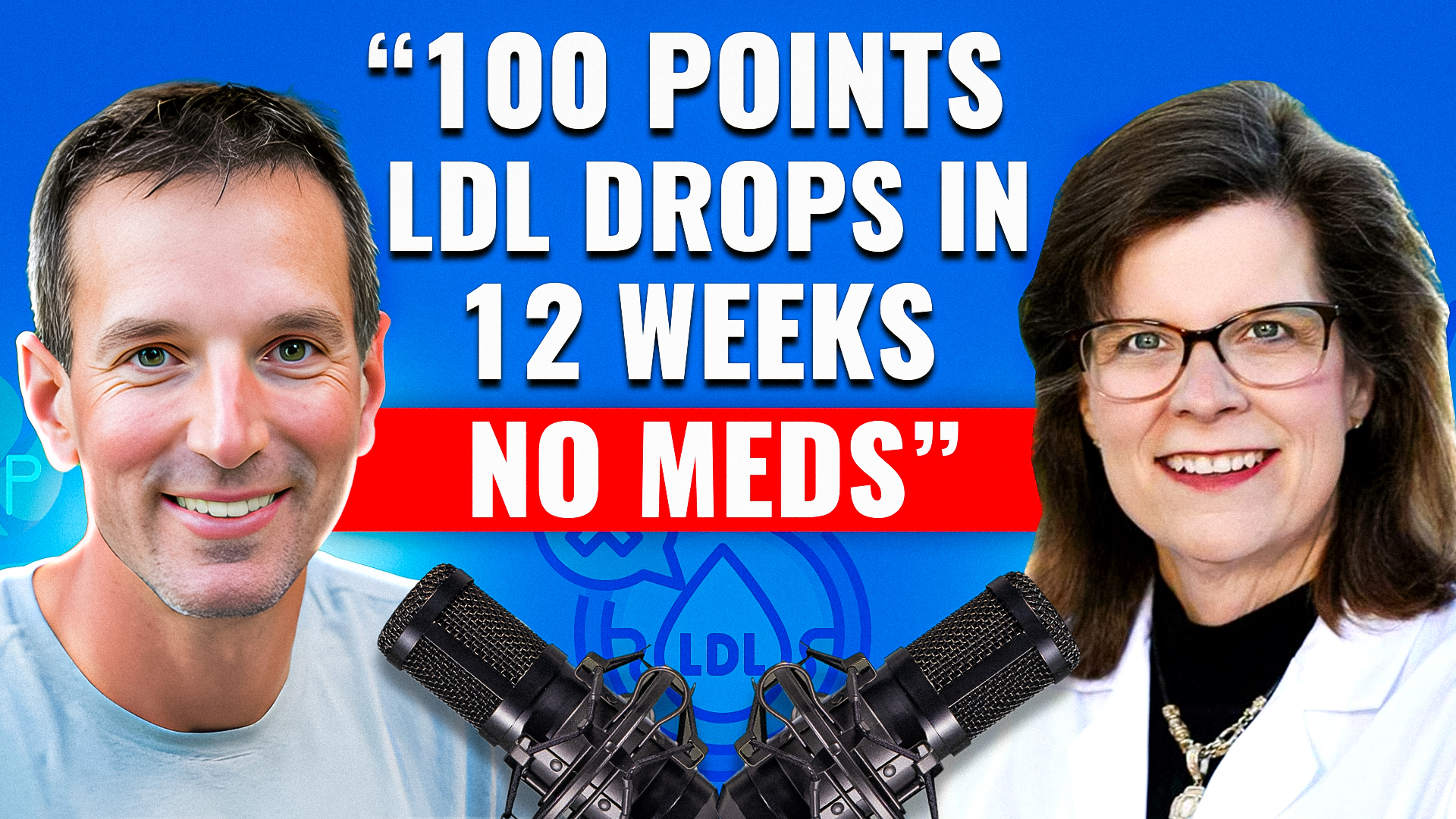
And I started doing that. I started doing that for myself, but I also started doing it with my clients. And the results were stunning on the amount of function that was being produced, that the drugs weren't necessarily producing. So I'm like, wow, I'm onto something. Let's, let's keep going down this path. And then the reversal of diabetes, the, you know, A one Cs that go from 14 to seven in 12 weeks, or the cholesterol, the LDL cholesterols that drop a hundred points in 12 weeks. This isn't with medications, this is with getting the biochemistry right. And creating an environment that supports that.
Kathy (19m 47s):
That was became the strategy. It's the strategy for myself. It's the one I try to live by, but it's also the one that I coach patients in. Let's figure out what in your life has created the chaos appropriately. And let's see if we can create a new strategy around that, and then figure out a way to make it easy to implement.
Brian (20m 8s):
Yeah, that's, that's a great point. And like just supporting the body with the things that it needs. A lot of times that can lead to solutions as, as opposed to like just, okay, well you're overweight, let's just start restricting more.
Kathy (20m 22s):
Whew. That's, that's a slippery slope. It's one of my concerns with the GLP ones is most of the people that are needing GLP ones are in this deficient state of the, the vast amount of biochemistry they need. So yeah, the GLP ones will cause the body to lose weight, but often it has to cannibalize the muscle to liberate those locked up nutrients to keep everything going. And I, I'm just a little, I'm very afraid that that's gonna create a long-term compromise in longevity and vitality. Yes, they'll weigh less, but will they have a brain that works? Will they have bones that work? Because I find that, yeah, you've lost weight, but you're still deficient.
Kathy (21m 3s):
You're still not getting what you need to get from your diet as a critical concept.
Brian (21m 9s):
Yeah, it sounds very similar. I don't know if you're familiar with like, sort of the pro metabolic approach. I've had some individuals on regarding that. Interesting. I just watched a video showing how like individuals ate in like, I don't know, the forties and fifties and sixties And, you know, they didn't have perfect diets, but they were, they were a lot leaner and healthier than we were today. And you can point at a lot of different things, but probably a big part of that is just like depletion of like nutrients in the soil. And also just the way our food system has just become industrialized with, you know, all these, you know, you could say vegetable oils as well, could, could point to mitochondrial dysfunction and things like that.
Kathy (21m 49s):
You know, prior to, I would say the fifties after World War ii, there was a huge shift, but prior to the fifties, the poorest people in our society had the best diets because they had to forage or they had to grow it, or they had to hunt it, and they rarely had too much inflammatory sugar that was just never a pound of a year type thing. Right. And so I think the other thing that happened in the forties and fifties is everybody had a garden. Everybody had a garden and everybody had chickens and everybody had a cow. Right. You know, so yeah, you were still maybe having biscuits and gravy, but you were also outside working that garden, you were getting the sunlight, you were physically contracting and moving muscles to circulate oxygen.
Kathy (22m 38s):
So you had this culture that actually was conducive for the human function. And so often when, when I try to coach, I'm like, how do we create a culture that produces health for you? Right. Because the current one is pretty toxic. And so it's, and a lot of people will come to me, shame in this shame mode of I'm blaming myself for being overweight and sick. I'm like, you know what, 73% of our food system is ultra processed toxic waste. So three out of four things you can choose to eat in the United States will hurt you. So that you're right, we've got some big challenges culturally to fix that.
Kathy (23m 20s):
But until the, the leaders of our world do that, I I think each of us as individuals take responsibility for doing that for ourselves and our family.
Brian (23m 30s):
Yeah. And what would you say some steps to do that? I mean, you know, we have a farmer's market, you know, getting food from that is something that my wife and I tend to do quite a bit. I mean, what maybe steps do you, do you advise your clients to do that? To start like just making sure that they're getting the right foods from the right sources?
Kathy (23m 48s):
Well, it's a, what I do is a plant focused plant and protein focused approach. So you, you take, and first you gotta kind of figure out where people are, and I am okay. People are like, which is better? You know, a canned green bean or organically grown green bean. I'm like, whichever one you can get in. Right? There are some conditions that if I have somebody very has a, a terribly fatty liver and their liver enzymes are horrible, I'm gonna suggest we go as organic as possible to do that. But when I have people going from an ultra processed approach, I'm not gonna beat them up over them choosing a canned green bean for 50 cents.
Kathy (24m 30s):
Right. I think frozen produce can be a real great step towards that. And then of course, the real muscle is grow your own garden. I mean, get out there and, and eat some dirt and, and get the sunlight and move those muscles. And that's ultimately probably the best. So it's a journey. Good, better, best. Right. I often tell people, don't let great, get in the way of good. Let's get started and let's, let's choose a green bean over the McDonald's. Right. Let's choose something there to start getting. And the other thing I do in my wellness pharmacy is I do cooking demonstrations and often people just need the encouragement to see it done and see it done in a very simple way so that they have the, the confidence to go home and do it themselves.
Brian (25m 24s):
Yeah. You know, they, they probably are intimidated initially, right. But once they realize
Kathy (25m 29s):
Yeah, yeah. We, we've lost a lot of ancestral knowledge around food and cooking and, And you know, we also have a deficit of time. You know, I've had people that say, how do you eat healthy on a budget? And I always push back and say, which budget are we talking about? Is it the money budget, the time budget, or the health budget? Which one are we spending here? Right. Right. And I think the time one is one that's got us all in a tizzy, right?
Brian (25m 57s):
Yes, yes, yes. Right. They, yeah. I mean, people think cooking for yourself can take a lot of time and, and it can, I think more importantly, like if you're prepared and you put the prep in, then, you know, I I always say this, cooking for yourself is one of those should be a top priority top three in, in my book.
Kathy (26m 16s):
Yeah. And, and I think a little bit of in intentionality, so that's just, it is, I'm going to go shopping and I'm gonna spend a little time thinking about this for the week. Right. I think that's the investment more so than the time it takes to throw something in an air fryer or, or pan fry something. Right. It's the actual being prepared and being prepared at work. When you're tired and you're stressed, what are you gonna grab? Are you gonna go to the vending machines that are all toxic? Or are you gonna grab some nuts that are in your drawer? Right. So those kind of strategies, I'm that granular with my patients. It's like, Hey, let's figure out what you like, let's figure out how to get this stuff in you.
Brian (26m 58s):
Yeah. I liked your, your quote, let's not good let, don't let good get in the way of No, don't look great. Get in the way of good. Is that right? Yes.
Kathy (27m 7s):
Yess a good one. I thinks. Good one. Think that's what I live by most days. And a lot of people do, they just get paralyzed with this concept of having it having to do it perfectly. I'm like, oh, no, no, let's just do it.
Brian (27m 20s):
Yeah. Just do it. Same thing. I think just like in sort of, I'm in more of like the movement camp, right? Like lifting and things like that. Like, you know, lifting can be intimidating for I'm sure a lot of people, especially if they start it later in life or going to the gym, but it's not about being perfect and it's all about just like, it know, maybe finding some support around it and then just, you know, putting in the time and, and, and prioritizing it.
Kathy (27m 45s):
I think the more fun you have, the better too. Yeah. And so I noticed you talked a lot, you had a podcast on zone two and when I, you know, I've been studying the Blue Zones research since it came out 20 plus years ago. And what really kind of made me laugh was that nobody who lives to be a hundred in those things exercise, but they all have lives that nudge them into movement. And I tend to talk about movement and I teach it in four ways. You've gotta have balance and stability. You, you have what I call run from the lion, which is high intensity interval, you know, it's that flea scenario. And the research supports that.
Kathy (28m 25s):
And then I call tote and fetch. So lifting heavy stuff like our ancestors lifted carcasses or gardening and all that stuff. And then the, the zone two that I call, I call it hunt and gather. 'cause our ancestors, And what we know about Hunter Gather is they did that for hours a day and their, their actual zone of heart rate was in that zone two. And so you gotta do a little bit of all of that throughout the week. And then again, why do it? Well, we know the, the, the research on exercise is very vast and very positive, but ultimate to me, it's to drive oxygen to the A TP production.
Kathy (29m 4s):
There's 13 atoms of oxygen in each molecule of a TP. Right. And when I saw that, I was like, okay, so how the heart was never designed to be the only muscle that pumped blood and oxygenation. No. In that hunter gatherer, we would vasodilate, we'd get hot, we'd contract our legs, we'd bend over, we'd get called. So all those things all enhance that vasodilation and the oxygen transport. And if nothing else, a TP is live. So that's kind of how I think about it. And then just communicate that to encourage people to move.
Kathy (29m 48s):
That's the critical piece.
Brian (29m 50s):
Yeah. Yeah. There's definitely some research too coming out of like non-exercise activity thermogenesis in the sense that like yeah. Working out, I mean, I love going to the gym. It's just something I do, but like, I also don't like sit around much. Right. You know? Right. You know, like I'm, I'm always moving or doing something and even right when I get up, I do some movement, like little things add up over time. It, you know, and I think some people maybe don't value that as much and that that's probably just as important. Well,
Kathy (30m 16s):
And you know, the research we have around, like, I think it was the Copenhagan study that looked at what kind of exercise actually extended life. What was interesting is the gym was a little over one and a half years or something like that, but the one that extended it over nine years was racket sports. Hmm. And so if you think about that, yes, you're getting the physical movement, but you're also getting a community. You're in community communication with an individual, so you're getting connection and you're also using your antebellum for balance and you're also solving a puzzle. Right. You have some strategies. So you have so many systems working there. Like I tell patients, the more fun you can have, the better.
Kathy (30m 59s):
I wish we had community dances again where we could square dance and you can't worry and square dance at the same time because you mess everybody up. So it's a very meditative, intentional mindset and it's fun. And, and I, I think humans just need big doses of that.
Brian (31m 16s):
Right. I feel like it, it, we've lost that a little bit, especially with like covid and everything. I don't know, I mean, we live in a pretty dense area with a lot of people, but like, you know, we're, we're somewhat isolated. I mean, you know, we live on almost an acre and like, you might not run into anyone for a while. Like, I'll go on walks with my dogs and maybe see a few people, But it just seems like everyone is just, you know, that whole, you know, environment of society. Like, there's not a lot of like bonding that you're seeing. Like even like when we have plans we have to make, we're always the ones asking, oh, you want to come over? You know, we're always hosting and having people over, you know, and everyone's so caught up in, in their lives And, you know, rightfully so with their kids and this and that and taking them everywhere.
Brian (31m 58s):
I just feel like this, the community bonding, you're just not seeing that much anymore. And I think that's a, that plays a role as well,
Kathy (32m 5s):
Plays a huge role in health. We know that isolation is way worse than smoking 15 cigarettes a day or being obese or drinking alcohol. Way worse than all of that almost put together is being alone. And so our culture and, and some of, there are people who use fear to sell things. Right. And so I think we are more fearful of our neighbor. And so I applaud you for taking action to connect to, to, to bring connectivity together and to also teach our children that they don't have to really fear their neighbor. Like we're being often marketed to.
Kathy (32m 47s):
So bravo. I think it's a critical, critical and not looked at piece, you know, I've said this for a while, the most powerful chemistry we have to facilitate health is love and connection. Mm. Second to that is food. And as a pharmacist in an independent pharmacy in a small town, I'm still dispensing love. And it used to be our healthcare system did that. It's not anymore. The transactional nature has taken away that therapeutic relationship where you really got to know somebody and you could really trust somebody. And I think consumers are gonna have to demand that it comes back and they will, you'll find it.
Kathy (33m 29s):
But you're gonna have to demand but demand for it.
Brian (33m 33s):
Yeah. And what, what, excuse me. Share a success story from your practice. Yeah, I love to hear that.
Kathy (33m 39s):
Oh, you know, 32 years.
Brian (33m 42s):
Yeah. I, 32 years may what, what sticks out? You know, maybe one or two,
Kathy (33m 46s):
You know, I think it's one or two things. It's, remember my goal is to help you, to assist you in having a great life. Now I don't get to define what that is. That's you. And we know life presents its challenges without us trying. Right. So I have this particular patient I've known all 32 years And you know, early in our relationship I helped her have babies, right? So we helped her navigate infertility, we did some pharmac, some pharmacy compounding. We coached her through that. And then over the course of her life, her kids grew and then she wanted better metabolic health and she wanted to manage her autoimmunity.
Kathy (34m 28s):
And So we did that. We worked on her nutrition and diet and culture and, and supported her in that. And she's done great And now she's dealing with another little challenge of cancer, right? So I think it's not necessarily just about not having those things, it's how do you navigate 'em, right. And have that great life at any state. So I'm incredibly proud to be a partner in her health, right? Not just her disease. We're just helping her navigate her life so that she has support as these life things show up. And she knows she has a partner in that.
Kathy (35m 8s):
I think that's the kind of relationship that I'm most proud of. And the fact that I've been able to have a business model that works that way, that is not just predicated on on taking pills. It's not, it's never has been. It's really about all the nuances of, of healthcare and care and connection that produces wellness in our society and our, and e each of us as individuals. Yeah.
Brian (35m 34s):
Yeah. I mean I think we all wish that we had a pharmacist like yourself and the phar, you know, like a local one that knew everyone's name. I recently went to one in in our area and they, and they did, it's like a small town pharmacy and they, they've been there forever. Know everyone's name sort of a dying breed. Would you say, and I mean obviously with Walgreens and CVS and things like that, do you see that like maybe that can, it could come back, you know, these smaller pharmacies, there's the mom, the mom and pop pharmacies, or is this sort of gonna be, you know, maybe in the next 20 years, you know, not not seen anymore?
Kathy (36m 12s):
I actually think there's a huge opportunity for them to come back and they're going away because of the insurance driven markets.
Brian (36m 22s):
Yeah.
Kathy (36m 22s):
It's 75% of all the prescriptions I fill through insurance are below my cost to buy it. Okay, now you get that. Now why would I do that? Because I'm taking care of my patients Now, that's not a business model that works very long. And if a pharmacist hasn't diversified into other issue areas, they would be gone. And we are losing about 10 a day this year because of that Wall Street chaos and, and nefarious, I, it's not good. I say though, I'm working on creating a network of wellness pharmacies, dispense health pharmacies that are smaller pharmacies dedicated towards that whole initiative of helping patients not need medications and if they need it, not need more.
Kathy (37m 15s):
And providing that wellness service. So I think it could be a great model. Now what's gonna have to happen with the consumer is they're gonna recognize that they're gonna probably have to fund that. And they're gonna have fund that until insurance transforms and healthcare transforms. Because like I said, most people have to be sick to access, you know, any of that money. So the business model is for chief medical officers of the family and mamas. 'cause mamas want their babies to be healthy and their families. And then employers are getting really tired of that system too, because they're spending a lot of money and not getting a return on that investment because nobody in that system is really helping them be, well, they're chasing the stroke, they're chasing the heart attack.
Kathy (38m 5s):
And I know we can prevent those if we actually get these systems right. And so I think pharmacy is uniquely educated and positioned to do that. And in a big chunk of my life, I'm trying to educate and move pharmacy towards that way as well. So yeah, I think it could come back and that's my commitment that it does, is that people have access to a wellness pharmacist in their life and in their care.
Brian (38m 33s):
Yeah. And, And you know, your book, The Modern Famine, what year did you come out with that?
Kathy (38m 38s):
This year?
Brian (38m 39s):
This year. This year. Very
Kathy (38m 41s):
Good. Yeah. In my spare time.
Brian (38m 42s):
Yeah. And what's, what was the, what drove you to write write that?
Kathy (38m 47s):
Well, I was fortunate enough to have the opportunity to do a TED Talk in 2018, I believe it was. And I started putting the, the, those concepts into the book about then, but was a little distracted with a pandemic and then two daughters that launched out of the home into college. And so I was able to get that put out this year. But it, it really takes that concepts and tease out for the individual, the patient. This is not a clinical book now, it is cited for clinicians, But it is, is language for patients. Patients do not have to understand science at all to read this book and get great value from it.
Kathy (39m 30s):
I always, my patients, I'm like, I don't trust you to tell me it's good, but I know they're getting something out of it. 'cause they come and tell me what they're eating or they come and tell me what they're doing. So it actually is helping people do something different to get a different outcome. Yeah.
Brian (39m 45s):
Called The Modern Famine. And what's I, I like asking this question as well. What one thing have you changed your mind on over the last, let's say 10 years?
Kathy (39m 55s):
Man, that is a great question. I don't, I don't know. I keep evolving my mind. I would say, I don't know if it's so much a massive change. There are things, I've been very surprised as I started going into the metabolic part of how impactful that was. Because, you know, we all studied, every medical professional studied the Krebs cycle and completely forgot it after the test because the test was so traumatic. And I'll tell you, one of the things that prompted me to start looking deeper in that biochemistry was a mom about 20 years ago, brought me a biochemistry book and asked me to explain the Krebs cycle and a TP production to her.
Kathy (40m 41s):
Now she was a mom of a profoundly autistic child, and this was before the internet, this was before Khan Academy where you could just get a tutorial on it. So I, I'm someone who will help. And so I took it on myself to actually walk her through what that was telling us. And that really, that little bit of education has prompted me to keep digging and then to just see the profound cultural impacts to that system. So I think way more about that than I ever did. And, and I think we have to because that's where the chaos lives.
Kathy (41m 21s):
But's also where the solution lives. I don't know if that answered the question, but Yeah.
Brian (41m 25s):
No, yeah, yeah. What one tip would you give someone that was start, you know, maybe wanting to get their health back in order or get their bodies back to what it once was? You know, 10, 15, 20 years ago, what one tip would you give them if they were just starting out
Kathy (41m 38s):
Vegetables? We gotta find a way to get 'em in. We gotta get, find a way to get 'em shown up in your life. The more variety, the better. And then the other thing is, if you eat a great diet, take the right supplements, but your gut doesn't work, did you eat 'em? And the answer is no. So if your gut is in chaos, nothing you do is gonna be fully, fully beneficial like it could be or should be. And then medicines, the modern medicines over the counter, they're really messing things up. And seven out of 10 Americans are taking a medication that by design alters these systems.
Kathy (42m 19s):
And so that's where the pharmacist can uniquely see where that may be happening and then help with that. So get the right chemistry in and we've gotta get the food as right as possible.
Brian (42m 30s):
Well said. Well Kathy, thank you for coming on. Best place for people to find you,
Kathy (42m 36s):
Kathy at Dr. Kathy says, or Kathy do, dr Kathy says.com with a K is probably the best way to get hold of me
Brian (42m 46s):
And people can, I know you have a store as well as you know, people can reach out to you through that as well, correct?
Kathy (42m 52s):
Sure, absolutely. I'm in the Tulsa, Oklahoma area just north of Tulsa in Owosso and be happy to see anybody.
Brian (42m 59s):
Well, thank you for coming on. This was a great conversation and we'll also put a link for your book as well. Thank
Kathy (43m 4s):
You so much, Brian. It's really great. Thanks
Brian (43m 6s):
For listening to the Get Lean, Eat Clean Podcast. I understand there are millions of other podcasts out there and you've chosen to listen to mine and I appreciate that. Check out the show notes@briangrin.com for everything that was mentioned in this episode. Feel free to subscribe to the podcast and share it with a friend or family member that's looking to get their body back to what it once was. Thanks again and have a great day.